
Rotational grazing: a sustainable alternative in the control of bovine ticks
Keywords:
control, ticks, livestock, grazing management, sustainableAbstract
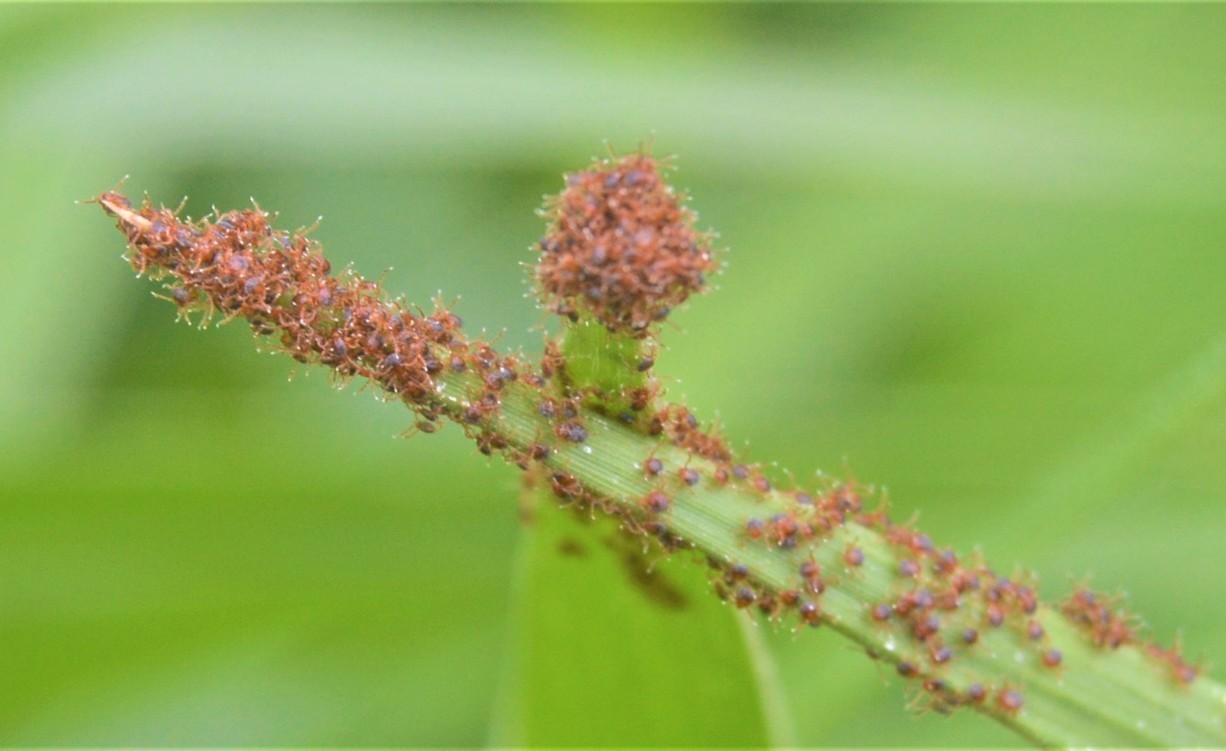
The tick Rhipicephalus microplus represents a highly relevant pest in Neotropical livestock systems due to its negative effects on cattle health and productivity. Its control constitutes a constant challenge for producers, primarily due to frequent resistance to conventional acaricides, the environmental damage associated with their use, and economic losses resulting from reduced herd profitability. This study documents the effectiveness of rotational grazing in Neotropical regions as a strategy to control R. microplus in cattle. Evidence indicates that pasture rest periods shorter than 30 days are insufficient to reduce parasitic loads, whereas rest periods exceeding 45 days, and even over 100 days, decrease infestations. Rotational pasture management with adequate recovery intervals constitutes a sustainable and effective alternative to control R. microplus, reduce conventional acaricide use, and enhance livestock system productivity.
http://dx.doi.org/10.21929/abavet2026.6
e2024-47.
https://www.youtube.com/watch?v=MFPkbBbDyNM
References
ANDREOTTI R, Barros JC, Zimmermann NP, Garcia MV, Higa LDOS, Martins, KR. 2024. Control of Rhipicephalus microplus tick larvae in the field based on distancing from the host-Lone tick system. Veterinary Parasitology: Regional Studies and Reports. 47:100950. ISSN: 2405-9390. https://doi.org/10.1016/j.vprsr.2023.100950
CANEVARI JT, Mangold AJ, Guglielmone AA, Nava S. 2017. Population dynamics of the cattle tick Rhipicephalus (Boophilus) microplus in a subtropical subhumid region of Argentina for use in the design of control strategies. Medical and Veterinary Entomology. 31(1): 6-14. ISSN: 1365-2915. https://doi.org/10.1111/mve.12199
CAMPOS-PEREIRA M, Labruna MB. 2008. Rhipicephalus (Boophilus) microplus. En: Campos-Pereira M, Labruna MB, Szabó MPJ y Klafke GM. (eds.) Rhipicephalus (Boophilus) microplus: biologia, control y resistencia. Medicina Veterinária, Sao Paulo, Brazil. Pp. 15 – 55. ISBN: 978-85-61461-05-8.
CORRÊA LA, Santos PM. 2003. Manejo de utilização de plantas forrageiras dos gêneros Panicum, Brachiaria e Cynodon. São Carlos, Brasil. Embrapa. ISSN 1518-4757
http://www.infoteca.cnptia.embrapa.br/bitstream/doc/45666/1/PROCIDoc34LAR.2003.00202.pdf
CRUZ BC, de Lima Mendes AF, Maciel WG, Dos Santos IB, Gomes LVC, Felippelli G, Teixeira PMA, Ferreira LL, Soares VE, Lopes WDZ, da Costa AJ, de Oliveira GP. 2020. Biological parameters for Rhipicephalus microplus in the field and laboratory and estimation of its annual number of generations in a tropical region. Parasitology Research. 119: 2421-2430. ISSN: 1432-1955. https://doi.org/10.1007/s00436-020-06758-5
CRUZ-GONZÁLEZ G, Pinos-Rodríguez JM, Alonso-Díaz MÁ, Romero-Salas D, Vicente-Martínez JG, Fernández-Salas A, Jarillo-Rodríguez J, Castillo-Gallegos E. 2023. Rotational grazing modifies Rhipicephalus microplus infestation in cattle in the humid tropics. Animals. 13(5): 2-9. ISSN: 2076-2615. https://doi.org/10.3390/ani13050915
CRUZ-GONZÁLEZ G, Pinos-Rodríguez JM, Alonso-Díaz MÁ, Romero-Salas D, Vicente-Martínez JG, Fernández-Salas A, Jarillo-Rodríguez J, Castillo-Gallegos E. 2024. Efficacy of rotational grazing on the control of Rhipicephalus microplus infesting calves in humid tropical conditions. Journal of Parasitology Research. 1:7558428. ISSN: 2090-0031. https://doi.org/10.1155/2024/7558428
CRUZ-GONZÁLEZ G, Pinos-Rodríguez JM, Alonso-Díaz MA, Romero-Salas D, Vicente-Martínez JG, Fernández-Salas A, Jarillo-Rodríguez J, Castillo-Gallegos E. 2026. Population dynamics of the tick Rhipicephalus microplus in cattle under three grazing systems in the mexican humid tropics. Agro Productividad. 18(12):219-227. ISSN: 2594-0252. https://doi.org/10.32854/s9aw2t88
DA SILVA RODRIGUES V, Sousa MCO, da Costa Maia R, Borges GCR, Rezende AF, Sousa AC, Sousa AC, Silva GMF, Suzin A, Fernandes MAF, Szabó MPJ. 2026. Alternative strategic control of Rhipicephalus microplus in the Cerrado of Minas Gerais, Brazil, by exploiting abiotic conditions. Veterinary Parasitology. 343: 110714. ISSN: 0304-4017. https://doi.org/10.1016/j.vetpar.2026.110714
ESTRADA-PEÑA A, Mallón AR, Bermúdez S, de La Fuente J, Domingos A, García MPE, Labruna MB, Merino O, Mosqueda J, Nava S, Cruz RL, Szabó M, Tarragona E, Venzal JM. 2022. One health approach to identify research needs on Rhipicephalus microplus ticks in the Americas. Pathogens. 11(10): 2-13. ISSN: 2076-0817.
https://doi.org/10.3390/pathogens11101180
ESTRADA-PEÑA A, Venzal JM, Nava S, Mangold A, Guglielmone AA, Labruna MB, de La Fuente J. 2012. Reinstatement of Rhipicephalus (Boophilus) australis (Acari: Ixodidae) with redescription of the adult and larval stages. Journal of Medical Entomology. 49(4): 794-802. ISSN: 1938-2928. https://doi.org/10.1603/ME11223
GRISI L, Leite RC, Martins JRDS, Barros ATMD, Andreotti R, Cançado PHD, de León PAA, Pereira JB, Villela HS. 2014. Reassessment of the potential economic impact of cattle parasites in Brazil. Revista Brasileira de Parasitologia Veterinária. 23(2):150-156. ISSN: 1984-2961. https://doi.org/10.1590/S1984-29612014042
HERNÁNDEZ AF, Teel PD, Corson MS, Grant WE. 2000. Simulation of rotational grazing to evaluate integrated pest management strategies for Boophilus microplus (Acari: Ixodidae) in Venezuela. Veterinary Parasitology. 92(2): 139-149. ISSN: 0304-4017. https://doi.org/10.1016/S0304-4017(00)00282-X
HÜE T, Fontfreyde C. 2019. Development of a new approach of pasture management to control Rhipicephalus microplus infestation. Tropical Animal Health and Production. 51(7): 1989-1995. ISSN: 1573-7438. https://doi.org/10.1007/s11250-019-01899-x
HÜE T, Berger A, Wang HH, Grant WE, Teel PD, de León A AP. 2021. Integrated control of the cattle tick, Rhipicephalus australis (Acari: Ixodidae), in New Caledonia through the pasture and cattle management method. Parasitology Research. 120(8):2749-2758. ISSN: 1432-1955. https://doi.org/10.1007/s00436-021-07235-3
HÜE T, Wang HH, Grant WE, Teel PD, Pérez de León AA. 2022. Implementation research for integrated tick control of Rhipicephalus australis (Acari: Ixodidae) through the pasture and cattle management method in New Caledonia. Journal of Integrated Pest Management. 13(1):26. ISSN: 2155-7470. https://doi.org/10.1093/jipm/pmac021
KLAFKE GM, Golo PS, Monteiro CMO, Costa-Júnior LM, Reck J. 2024. Brazil's battle against Rhipicephalus (Boophilus) microplus ticks: current strategies and future directions. Revista Brasileira de Parasitologia Veterinária. 33(2): 1-14. ISSN: 1984-2961. https://doi.org/10.1590/S1984-29612024026
KRÜGER AM, Lima PDMT, Ovani V, Pérez-Marquéz S, Louvandini H, Abdalla A L. 2024. Ruminant grazing lands in the tropics: silvopastoral systems and Tithonia diversifolia as tools with potential to promote sustainability. Agronomy. 14(7):2-18. ISSN: 2073-4395. https://doi.org/10.3390/agronomy14071386
LAGUNES-QUINTANILLA R, Gómez-Romero N, Mendoza-Martínez N, Castro-Saines E, Galván-Arellano D, Basurto-Alcantara FJ. 2024. Perspectives on using integrated tick management to control Rhipicephalus microplus in a tropical region of Mexico. Frontiers in Veterinary Science. 11:1497840. ISSN: 2297-1769.
https://doi.org/10.3389/fvets.2024.1497840
LEAL B, Thomas DB, Dearth RK. 2018. Population dynamics of off-host Rhipicephalus (Boophilus) microplus (Acari: Ixodidae) larvae in response to habitat and seasonality in South Texas. Veterinary Sciences. 5(2):2-13. ISSN: 2306-7381.
https://doi.org/10.3390/vetsci5020033
LEW-TABOR AE, Bruyeres AG, Zhang B, Valle MR. 2014. Rhipicephalus (Boophilus) microplus tick in vitro feeding methods for functional (dsRNA) and vaccine candidate (antibody) screening. Ticks and Tick-Borne Diseases. 5(5):500-510. ISSN: 2405-9390. https://doi.org/10.1016/j.ttbdis.2014.03.005
MASTROPAOLO M, Mangold AJ, Guglielmone AA, Nava S. 2017. Non-parasitic life cycle of the cattle tick Rhipicephalus (Boophilus) microplus in Panicum maximum pastures in northern Argentina. Research in Veterinary Science. 115: 138-145. ISSN: 1532-2661. https://doi.org/10.1016/j.rvsc.2017.03.009
MEO-FILHO P, Berndt A, Pezzopane JR, Pedroso AF, Bernardi AC, Rodrigues PH, Bueno IVC, Oliveira PP. 2022. Can intensified pasture systems reduce enteric methane emissions from beef cattle in the atlantic forest biome? Agronomy. 12(11): 2738. ISSN: 2073-4395. https://doi.org/10.3390/agronomy12112738
NAVA S, Mastropaolo M, Guglielmone A A, Mangold AJ. 2013. Effect of deforestation and introduction of exotic grasses as livestock forage on the population dynamics of the cattle tick Rhipicephalus (Boophilus) microplus (Acari: Ixodidae) in northern Argentina. Research in Veterinary Science. 95(3): 1046-1054. ISSN: 0034-5288. https://doi.org/10.1016/j.rvsc.2013.09.013
NAVA S, Rossner MV, Toffaletti JR, Da Luz M, Rossner MB, Signorini M, Morel N. 2024. Strategic control of the cattle tick Rhipicephlaus microplus applied to rotational and silvopastoral grazing systems in subtropical areas. Parasitology Research. 123(6):232. ISSN: 1432-1955. https://doi.org/10.1007/s00436-024-08256-4
NICARETTA JE, Dos Santos JB, Couto LFM, Heller LM, Cruvinel LB, de Melo Júnior RD, Cavalcante ASA, Zapa DMB, Ferreira LL, Monteiro CMO, Soares VE, Lopes WDZ. 2020. Evaluation of rotational grazing as a control strategy for Rhipicephalus microplus in a tropical region. Research in Veterinary Science. 131: 92-97. ISSN: 1532-2661.
https://doi.org/10.1016/j.rvsc.2020.04.006
RODRÍGUEZ-VIVAS RI, Jonsson NN, Bhushan C. 2017a. Strategies for the control of Rhipicephalus microplus ticks in a world of conventional acaricide and macrocyclic lactone resistance. Parasitology Research. 117:3-29. ISSN: 1432-1955.
https://doi.org/10.1007/s00436-017-5677-6
RODRÍGUEZ-VIVAS RI, Grisi L, Pérez de León AA, Villela HS, Torres-Acosta JFDJ, Fragoso Sánchez H, Romero-Salas D, Rosario-Cruz R, Saldierna F,
García-Carrasco D. 2017b. Potential economic impact assessment for cattle parasites in Mexico. Review. Revista Mexicana de Ciencias Pecuarias. 8(1):61-74. ISSN: 2448-6698.
https://doi.org/10.22319/rmcp.v8i1.4305
SALES DP, Silva-Junior MH, Tavares CP, Sousa IC, Sousa DM, Brito DRB, Camargo AM, Leite RC, Faccini JLH, Lopes WDZ, Labruna MB, Luz HR, Costa-Junior LM. 2024. Biology of the non-parasitic phase of the cattle tick Rhipicephalus (Boophilus) microplus in an area of Amazon influence. Parasites & Vectors. 17(1): 129. ISSN: 1756-3305. https://doi.org/10.1186/s13071-024-06220-w
SENASICA (Servicio Nacional de Sanidad, Inocuidad y Calidad Agroalimentaria). 2020. Resistencia a los garrapaticidas. https://www.gob.mx/senasica/acciones-y-programas/manejo-de-garrapaticidas-y-su-resistencia
SEVOV A, Yancheva C, Kazakova Y. 2017. Sustainable pasture management. New Perspectives in Forage Crops. Chapter 10. Pp. 183-201. ISBN: 978-953-51-3806-8.
https://www.intechopen.com/chapters/58077
TEUTSCHEROVÁ N, Vázquez E, Sotelo M, Villegas D, Velásquez N, Baquero D, Pulleman, Arango J. 2021. Intensive short-duration rotational grazing is associated with improved soil quality within one year after establishment in Colombia. Applied Soil Ecology. 159:1-11. ISSN: 1873-0272. https://doi.org/10.1016/j.apsoil.2020.103835
WILKINSON PR. 1955. Temporary destocking of pastures to aid control of the cattle tick. Nature. 176(4480):515. ISSN: 1476-4687. https://doi.org/10.1038/176515a0
WILKINSON PR. 1957. The spelling of pasture in cattle tick control. Australian Journal of Agricultural Research. 8(4):414-423. ISSN: 1836-5795.
https://doi.org/10.1071/AR9570414
WILKINSON PR. 1964. Pasture spelling as a control measure for cattle ticks in southern Queensland. Australian Journal of Agricultural Research. 15(5):822-840. ISSN: 1836-5795. https://doi.org/10.1071/AR9640822
Downloads
Published
Issue
Section
License

This work is licensed under a Creative Commons Attribution-NonCommercial 4.0 International License.