
Optimización de la relación temperatura-humedad en pollo de engorda mediante análisis de superficie de respuesta en condiciones comerciales
Palabras clave:
pollo de engorda, análisis de superficie de respuesta, índice temperatura-humedadResumen
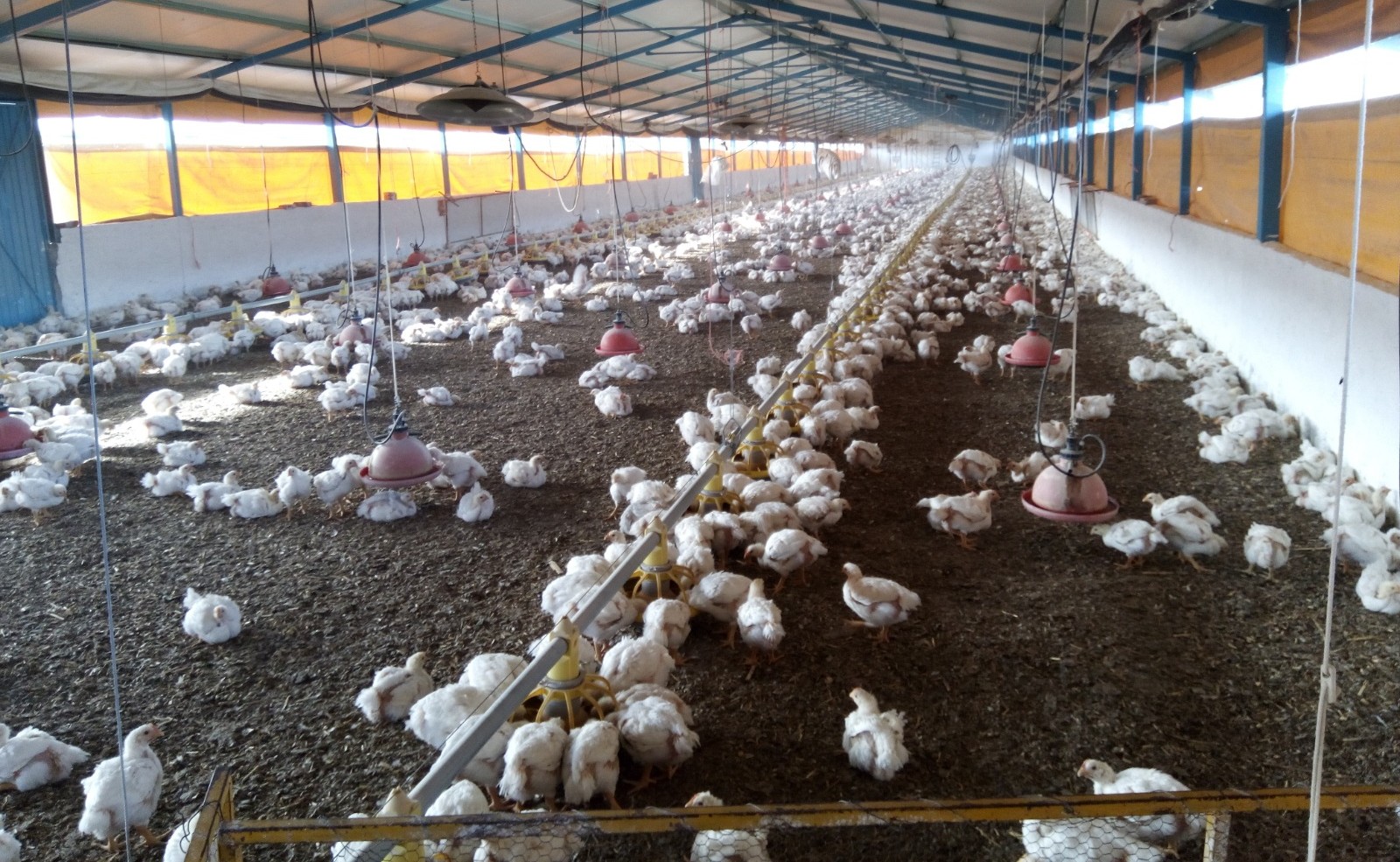
Se evaluaron los efectos de los cambios de temperatura y humedad relativa dentro de la caseta (DC) y su efecto sobre los indicadores productivos en pollo de engorda criado en un sistema comercial con control manual de temperaturas y humedad. Se analizaron cuatro ciclos productivos (26,000 aves/ciclo; 10 pollos/m2). Cada ciclo comprendió cuatro fases productivas (pre-inicio, inicio, desarrollo y finalización), el alimento y agua se proporcionaron ad libitum. Se tomaron seis muestras de 120 aves por ciclo en cada fase y se determinó peso corporal y ganancia de peso diaria, se estimó el consumo de alimento e índice de conversión alimenticia ciclo-1 fase-1. La información se analizó bajo modelos de efectos fijos, componentes principales (CP) y, análisis de superficie de respuesta (ASR). Las temperaturas y humedales fueron diferentes (P<0.05) entre los ciclos y fases. La temperatura y la humedad afectaron (P<0.001) los indicadores productivos por ciclo en cada fase. Aspecto que se corroboró con el análisis de CP (P<0.001). Mientras que, el ASR determinó, que, en los sistemas con control manual de temperatura y humedad, el proceso de optimización de las ecuaciones de regresión para el desarrollo de las aves con la mejor combinación de temperaturas y humedad relativa fueron: 29°C/31%, 26°C/35%, 25°C/35%, 30°C/44%, 14°C/64% y 18°C/50% para las semanas 1, 2, 3, 4, 5 y 6, respectivamente.
http://dx.doi.org/10.21929/abavet2026.1
e2025-106
Citas
ARANTES DE SOUSA LF, Pegoraro EL, Alves de Almeida E, Lunedo R, Furlan RL, Macari M. 2016. How heat stress (continuous or cyclical) interferes with nutrient digestibility, energy and nitrogen balances and performance in Broilers. Livestock Science. 192:39-43. https://doi.org/10.1016/j.livsci.2016.0814.0
AVIAGEN. 2022. Pollo de engorda ROSS 308 AP: objetivos de rendimiento. Aviagen EUA. https://aviagen.com/assets/Tech_Center/BB_Foreign_Language_Docs/Spanish_TechDocs-v2/RossxRoss308_BroilerPerformanceObjectives2022_ES.pdf
AYDAR AY. 2017. Utilization of response surface methodology in optimization of extraction of plant materials. In (Ed.), Statistical Approaches With Emphasis on Design of Experiments Applied to Chemical Processes. IntechOpen.
https://doi.org/10.5772/intechopen.73690
CASSUCE D, Tinôco I, Baêta F, Zolnier S, Cecon P, Vieira MF. 2013. Thermal comfort temperature update for broiler chickens up to 21 days of age. Engenharia Agrícola. 33:28-36. https://doi.org/10.1590/S0100-69162013000100004
COBB-VANTRESS, INC. 2022. Cobb500TM Pollo de Engorde: Suplemento informativo de rendimiento y nutrición. https://www.cobbgenetics.com/assets/Cobb-Files/2022-Cobb500-Broiler-Performance-Nutrition-Supplement.pdf
DESHAZER JA, Hahn GL, Xin H. 2009. Chapter 1: Basic Principles of the Thermal Environment and Livestock Energetics. In J.A. DeShazer (Ed.), Livestock Energetics and Thermal Environmental Management. 1-22. St. Joseph, Mich.: ASABE. ASABE # 801M0309. ISBN: 1-892769-74-3. https://doi.org/10.13031/2013.28294
HAI L, Rong D, Zhang ZY. 2000. The Effect of environment on the digestion of Broilers. Journal of Animal Physiology and Animal Nutrition. 83:57-64.
https://doi.org/10.1046/j.1439-0396.2000.00223.x
HASSAN FU, Alagawany M, Jha R. 2022. Editorial: Interplay of nutrition and genomics: Potential for improving performance and health of poultry. Frontiers in Physiology. 13:e1030995. https://doi.org/10.3389/fphys.2022.1030995
JONGBO AO. 2024. Effects of sidewall opening areas on the performance of broiler chickens and the indoor climatic conditions of backyard poultry building. Acta Scientiarum: Animal Sciences. 46:1-8.
https://doi.org/10.4025/actascianimsci.v46i1.66396
KHURI A. 2017. Response surface methodology and its applications in agricultural and food sciences. Biometrics & Biostatistics International Journal. 5(5):155-163. https://doi.org/10.15406/bbij.2017.05.00141
LITTELL CR, Milliken AG, Stroup WW, Wolfinger DR, Schabenberger O. 2006. SAS® for Mixed Models. 2da edición. Cary, NC: SAS Institute Inc. Pp. 733-735. https://es.scribd.com/document/916775419/SAS-for-Mixed-Models-2nd-ed-Edition-Ramon-C-Littell-instant-access-2025
LITTELL CR, Stroup WW, Freund JR. 2002. SAS® for Linear Models. Cuarta edición. Cary, NC: SAS Institute Inc. Pp. 191-194. https://typeset.io/pdf/sas-for-linear-models-4xf4c34car.pdf
MONTANERO FJ. 2008. Análisis multivariante. Universidad de Extremadura, Servicio de Publicaciones. ISBN: 978-84-691-6343-6.
https://dehesa.unex.es/entities/publication/5a590025-a7f4-4dd7-a986-b55874d4c071
MONTGOMERY D. 2002. Diseño y análisis de experimentos. 2da edición. México: Editorial Limusa. ISBN: 968-18-6156-6.
https://www.researchgate.net/publication/362079778_Design_and_Analysis_of_Experiments_9th_Edition
MUZZAMMIL M, Javed A, Zakwan M. 2015. An optimization technique for estimation of rating curve parameters. Indian Association of Hydrologists (IAH), Roorkee. Symposium on Hydrology, 22-23 diciembre 2015, Nueva Delhi, India. Pp. 234–240. https://www.researchgate.net/publication/305767208_AN_OPTIMIZATION_TECHNIQUE_FOR_ESTIMATION_OF_RATING_CURVE_PARAMETERS
NILIPOUR A. 2012. Pollo moderno- cómo obtener el máximo rendimiento- Desafío, oportunidades y metas. http://www.engormix.com/MA-avicultura/manejo/articulos/pollo-moderno-como-obtener-t4082/124-p0.htm
OGUNLOWO QO, Adedayo AA, Wook HN, Anis R, Misbaudeen AA, Ezatullah Z, John AA, Bukola OA, Kosemani BS, Ilori TA, Lee HW. 2024. Analysis of microclimate temperature and relative humidity distribution of local poultry house in a subtropical area of Nigeria. Journal of Agricultural Engineering. 55(2):e1561.
https://doi.org/10.4081/jae.2024.1561
OMOMOWO O, Falayi F. 2021. Temperature-humidity index and thermal comfort of broilers in humid tropics. Agricultural Engineering International: The CIGR e-journal. 23:101-110. https://cigrjournal.org/index.php/Ejounral/article/view/6425/3677
PISHGAR-KOMLEH S, Keyhani A, Mostofi-Sarkari M, Jafari A. 2012. Application of response surface methodology for optimization of picker-husker harvesting losses in corn seed. Iranica Journal of Energy & Environment. 3(2):e64390.
https://www.ijee.net/article_64390.html
QUINTANA LJA. 2020. Manejo del pollo de engorda durante su primera semana de vida. Avicultores y su Entorno. BM Editores. Año 20, n.° 122.
https://bmeditores.mx/avicultura/manejo-del-pollo-de-engorda-durante-su-primera-semana-de-vida/
SÁNCHEZ-CHIPRÉS DR, Valera-Rojas M, Casasola-Torres RA, Gutiérrez-Borroto O, Mireles-Flores S. 2021. Atenuación del estrés calórico en pollos con la suplementación de un producto de cromo orgánico. Revista Colombiana de Ciencia Animal - RECIA. 13(1):e792. https://doi.org/10.24188/recia.v13.n1.2021.792
SONG Z, Liu L, Sheikhahmadi A, Jiao H, Lin H. 2012. Effect of heat exposure on gene expression of feed intake regulatory peptides in laying hens. Journal of Biomedicine and Biotechnology. 2012, e484869. https://doi.org/10.1155/2012/484869
TAHERI A, Kenari AA, Motamedzadegan A, Habibi-Rezaei M. 2011. Poultry by-products and enzymatic hydrolysis: optimization by response surface methodology using alcalase® 2.4L. International Journal of Food Engineering. 7(5):e1969. https://doi.org/10.2202/1556-3758.1969
TAO X, Xin H. 2003. Acute synergistic effects of air temperature, humidity, and velocity on homeostasis of market-size broilers. Transactions of the ASAE. 46:e12971. https://doi.org/10.13031/2013.12971
TORRES V, Ramos N, Lizazo D, Monteagudo F, Noda A. 2001. Modelo estadístico para la medición del impacto de la innovación o transferencia tecnológica en la rama agropecuaria. Revista Cubana de Ciencia Agrícola. 42(2):133-139.
https://www.redalyc.org/articulo.oa?id=193015494003
WILLIAMS Y, Basitereb M, Ntwampea SKO, Ngonganga M, Njoyaa M, Kaskotea E. 2019. Application of response surface methodology to optimize the COD removal efficiency of an EGSB reactor treating poultry slaughterhouse wastewater. Water Practice and Technology. 14(3):507-514. https://doi.org/10.2166/wpt.2019.032
Descargas
Publicado
Número
Sección
Licencia

Esta obra está bajo una licencia internacional Creative Commons Atribución-NoComercial 4.0.